This project focuses on improving operational workflows inside a warehouse management system currently in beta testing across live warehouse environments. Due to the product being unreleased, visuals have been simplified and anonymized to focus on workflow structure and usability decisions rather than interface branding.
At the first stage, I focused on the order processing workflow, covering packing and shipping tasks performed on tablet devices. The main challenge was presenting all critical information on a limited screen space without requiring excessive scrolling or context switching during fast-paced operational tasks.

The original packing interface made it difficult for users to maintain visibility over the full state of an order. Important information such as box contents, packed items, and remaining products was fragmented across the interface, increasing friction and slowing down the workflow.
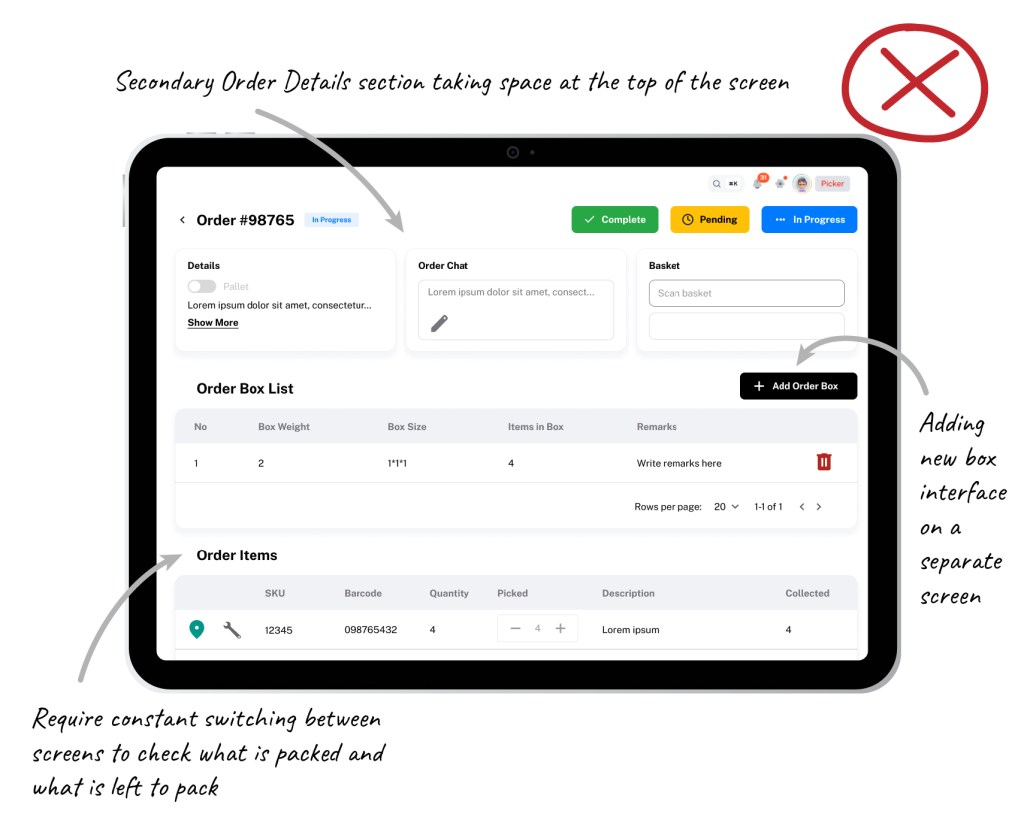
To address this, I redesigned the packing screen around a three-card layout that surfaced the most important operational data simultaneously:
- a list of order boxes,
- the currently active box with size, weight, and scanned items,
- and a real-time overview of remaining order items.
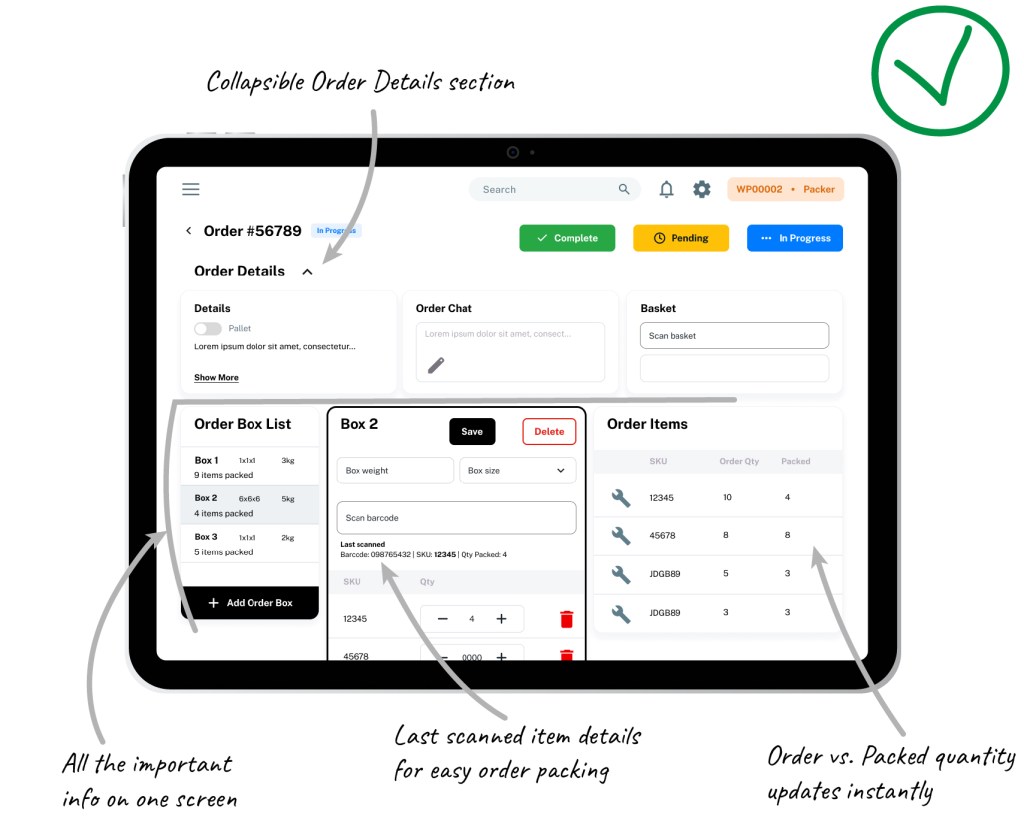
This structure reduced the need for navigation between views and helped users quickly verify packing progress at a glance.

The project also exposed several usability issues during real-world testing. Because the system is tablet-first, touch interaction accuracy became critical. Small buttons, limited spacing, and dense layouts contributed to misclicks and operational friction. These findings helped guide further improvements to spacing, touch targets, and the overall information layout.
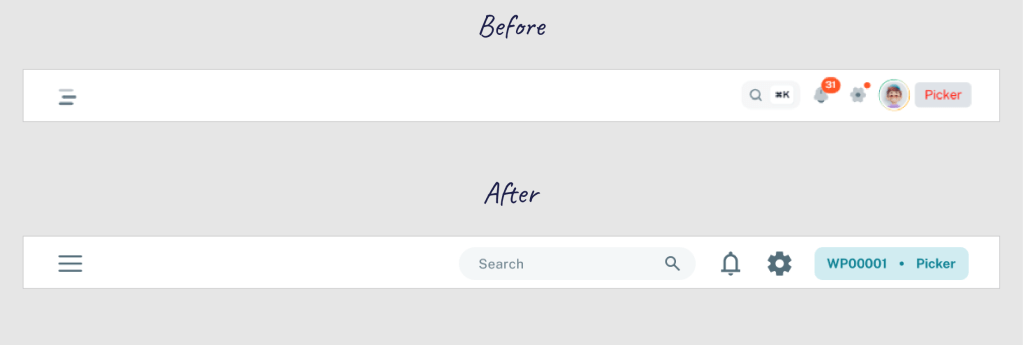
The design evolved around the realities of live warehouse use, where speed, clarity, and reducing errors mattered more than visual complexity. Since the product is still in beta, feedback from warehouse teams continues to shape the workflows and reveal edge cases that weren’t obvious during the initial design phase.

